Department
Students were tested on their mathematical ability. If they had not done maths at Leaving level, they were put into a remedial group to build their skills. An excellent text book was provided to allow students to work through the syllabus by themselves, with help provided if necessary from the staff.
Science was another area, which was streamed according to ability. Like maths, failure to complete this at Leaving level resulted in students being assigned to a remedial group. In this group, they were assigned activities to improve their standards.
In addition to teaching maths, the Maths Department, were responsible for the way in which student marks were structured. They provided arguments in favour of the validity of frequency distributions and the suggestions for cut-off points.
Each department produced lists of all students taking particular subjects, set out in rank order from the best to the worst, with an evaluation mark with each name. The Senior Lecturer gained the agreement of staff concerning the cut-off point between satisfactory and unsatisfactory and drew a line through the list at the point.
It was agreed that overall, there might be a failure rate of 10% +x (plus or minus +) and a distinction rate of about 15% +x: also that the Satisfactory group (Group C) should be distinctly larger than the Creditable group (Group B).
When marks were set out in the rank order, there were a number of students on each mark. Very large numbers appeared against the marks in the Satisfactory and Creditable sections – bulking around the mean. The Unsatisfactory and Distinction groups were easily distinguishable above and below, with either few or no names against each mark. Often the numbers against marks to a clear group at each extreme. Very occasionally, no tail end appeared, with quite large numbers of students on the lowest range of marks. With such results, the Department could claim no failures.
The Science staff were responsible for working with students to plant trees, shrubs and other plants as well as to supervise the weeding of the quadrangles. They were also well-represented in running science camps and in the Mentor Cup boat race.
Programs
- Science
- Maths background and method
- Geology
- Computing
Research and Publications
Staff
Len McKenna (HOD)
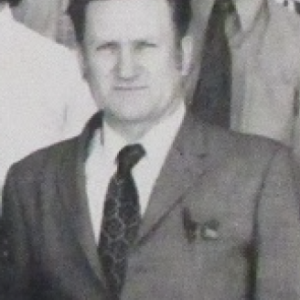
Dr. Len McKenna was a highly regarded pioneer and senior lecturer at Mount Lawley Teachers’ College (which later became Edith Cowan University – ECU). He initially trained as a teacher, graduating from Claremont Teachers Training College in 1951. He furthered his education by obtaining a BSc in Geology, a BA in English, a Bachelor of Education, a Master’s degree, and a Doctorate in Science Education.
Len McKenna was a senior lecturer in charge of maths and science, and later became Assistant Vice Principal in 1974. He played a significant role in shaping the curriculum and culture at the Mount Lawley campus, promoting practical skills and a strong sense of community. He was known for making science engaging and fun for his students.
Prior to teaching at MLTC, Len was an early specialist in introducing natural science on Channel 7 children’s TV. He appeared in his segment of the Children’s Session in the first week of television. It became a weekly session and continued for ten years until the last week of the children’s session in Oct. 1969.
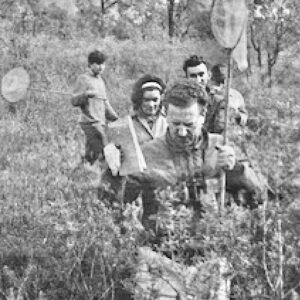
He was the president of the WA Naturalist club in 1966 and is shown here hunting for tree frogs.
Len was keen on students doing gardening. Graylands, and later MLTC students improved the grounds, while the nursery organised by Len McKenna, was opened on Arbor Day to provide the shrubs and plants needed for the grounds.
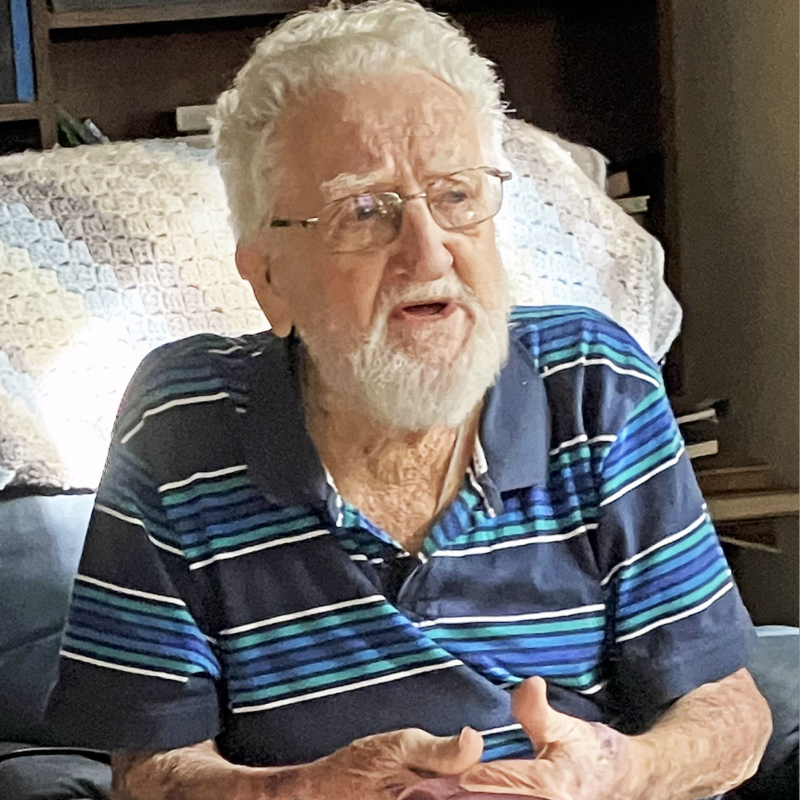
Len McKenna is now over 100 years old and is still very interested in painting and geology, amongst other things.
His teaching philosophy continues to influence teaching strategies at ECU to this day.
Jack Bana
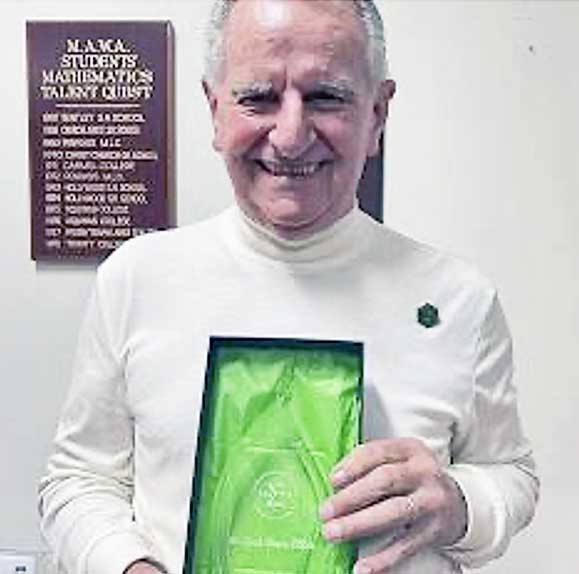
Jack Bana is a Perth-based mathematics educator who was the former Director of the Mathematics, Science and Technology Education Centre at MLTC, later ECU. He is also the co-author of numerous mathematics textbooks for both students and teachers.
He is a highly respected figure in mathematics education, especially for his work with the Mathematical Association of Western Australia (MAWA). He was awarded an Order of Australia Medal in 2024 for his service to tertiary education.
Jack has been involved with MAWA for nearly 50 years, holding various roles including President and Student Activities Coordinator. He has also initiated and managed several student math competitions,
His research includes work on preservice teachers’ knowledge of difficulties in decimal numeration. He has also contributed to educational materials, such as Basic Facts Blitz: Tables Teacher’s Notes.
While his primary professional career was in the tertiary sector (university), his work and influence have broadly impacted mathematics education at all levels across Western Australia.
Jack Bana – interview with Sybe Jongeling
Dick Lamb
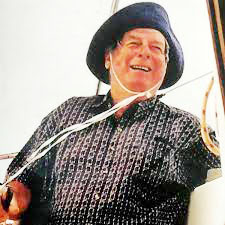
Vale Dick Lamb 11/1/932 – 8/3/2019. Dick died peacefully at home with his family after a battle with ill health.
Dick achieved a Bachelor of Science (Physics), a Master of Education (Statistics), and a Diploma of Education at the University of Western Australia, as well as his Teacher’s Certificate from Claremont Teacher’s College.
Dick’s academic qualifications first took him onto the career path of a secondary Mathematics Teacher then as a tertiary educator and leader.
He spent 10 years as Head of Mathematics, Science and Computing and 2 years as Assistant Director at Mt. Lawley College of Advanced Education ( now Edith Cowan University).
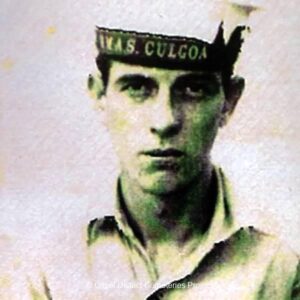
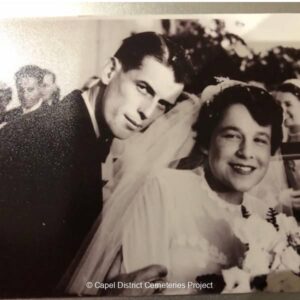
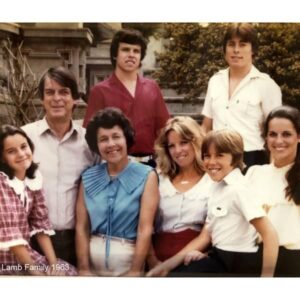
Dick Lamb – interview with Sybe Jongeling
Dick Lamb – Obituary from Capel District Cemeteries Project
I have fond memories of of Dick. I was in his class and was supposed to go on a camp to Exmouth. When he heard I was engaged to fellow student Mel he called me into his office to advise me I would not be going as I now had responsibilities. Wouldn’t happen in 2026. Lovely man and a great mentor.
Lee and Mel Broun
Fondly remembered for his wit, intelligence and ability to bring well laid plans to fruition. Loving condolences to Dolores and his beautiful family.
Doreen, Ivor and family – March 18, 2019
Fond memories of arguing late into the night with Uncle Dick. An auto-didact with incisive and inquiring mind, he and Aunty Lor kept an open and generous hearth to all all who came.
Sari Smith – March 11, 2019
So many memories. So many good times. So many things achieved.
From all your “Mt Lawley Mates” present and gone – March 12, 2019
Tony Knight
…
Ken Retallack
Retallack Ken 16.9.1942 – 28.7.2019
Kerry Clarke
…
Pat Garnett
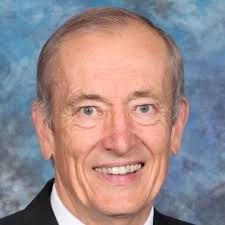 Pat Garnett has teaching and research interests in chemistry and science education and is author of over 100 publications in chemistry and science education. He has secondary curriculum and examination experience in chemistry and science.
He has been the Chair of the Edith Cowan College Board and retired as Deputy Vice-Chancellor at Edith Cowan University at the end of 2007, following 34 years at the university. Since retirement he has undertaken consultancies with several universities including reviews of course and teaching programs, research centres and institutes, schools and faculties, offshore teaching, governance arrangements and quality reviews. He also chaired the Western Australian Curriculum and Standards Authority Board 2011-2021.
Bill Laidman
…
Graham Pike
…
Robert McLaughlin
…
Pender Pedler
16.9.1942 – 7.1.2025
Passed away peacefully at a Perth hospital. Beloved son of Arnie and Isobel (both dec). Brothers Bruce (dec) and Fred Rosie (dec) and lan. Dearly loved husband of Ruth. Loving father of Kim, Scott, Johannah and Elizabeth. Loving father-in-law of Cheryle, Jay and Andrew. Very loving Poppy to Ruby, Harry and Juno. He will be sadly missed and will be forever in our hearts.
Ken Tobin
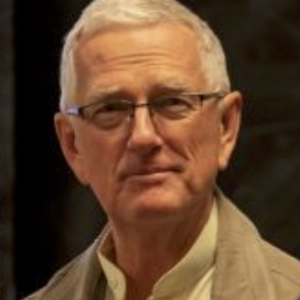 In 1964, Kenneth Tobin began teaching high school science and mathematics in rural Western Australia. He continued as teacher and curriculum developer for a decade, after which he became a teacher educator at Graylands Teachers College, and MLTC. The emphasis at Mount Lawley College was on the preparation of elementary teachers. During his time at the college, rapid advances in higher education heralded the college being able to offer bachelor’s and master’s degrees. Mount Lawley Teachers College led the way in Western Australia in the development of computer education courses for practicing and prospective teachers.
He has also worked at the Western Australian Institute of Technology (now Curtin University) and has been an adjunct professor at Queensland University of Technology, and Murdoch University. Tobin came to the United States in 1987 and was a tenured professor at Florida State University (10 years), University of Pennsylvania (6 years), and the Graduate Center of the City University of New York (15 years), where he is presently Presidential Professor of Urban Education.
Tony Watson
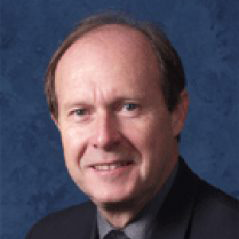 Tony was a former Deputy Vice-Chancellor; Executive Dean Computing, Health & Science; Head of School and foundational Professor of Computing & Information Sciences at Edith Cowan University. Over 40 years Tony helped found that institution and develop it into a successful University which has serviced hundreds of thousands of students. He was deeply invested in the power of Higher Education and technology to change lives for the better.
Tony was a leading Cybersecurity researcher, Government advisor, ICT, international education & commercialisation pioneer, WA Chair of the ACS Foundation, a life member of the ACS (Australian Computer Society), an Advisory Board Member at Practera, Lead Facilitator for the CSIRO Innovate to Grow program, and Academic Board Member of the Australian Data and Cyber Institute.
“I have known Tony from the the establishment of WA College of Advanced Education and later at ECU. He was a friend and work colleague initially under the leadership of John Renner and Pat Garnett and later as Dean of the Faculty. Like his predecessors he was a super leader encouraging both myself and others to be innovative, problem solvers as well as empowering us to be leaders. in particular from my perspective as Associate Dean International he encouraged the development of key international relations to the benefit of the ECU and students both locally and overseas. He will sadly be missed.”
Jim Cross, 17 March, 2025
“Vale Professor Tony Watson. Sad news about Tony’s passing. He was responsible for giving my start at ECU. He was always very supportive and even after retiring was working hard for ACS and promoting Computing and IT sector. He will be sadly missed. A champion for computer science in WA and left an endelable mark on so many of us. Condolences to his family and colleagues.”
Leisa Armstrong, 17 March, 2025
Geoff Ring
 Geoff Ring 8/12/1947 – 28/10/2023.
Geoff worked in Applied Sciences, at Mt Lawley 1979 – 1983 and later moved into computing and multi-media.
He established the Computer Education Department Group and became Head of the Department of Multimedia Learning Technologies.
In 2000 he left the university scene to assist in the setting up of an eLearning company in Singapore but had to return home to Perth 3 years later after being diagnosed with a rare terminal blood cancer.
Bill Parnaby
Came from Scotland
Kevin Dear
Leslie Hill
…
Trevor Lacy
Trevor Lacy is an experienced education professional in Western Australia, known for his significant roles at the university and state education authority levels. He served as Deputy Vice-Chancellor at Edith Cowan University (ECU) until his retirement from that position at the end of 2007, after 34 years with the institution.
He chaired the Western Australian Curriculum and Standards Authority Board from 2011 to 2021, having a background that involved research and publications related to science education and teacher training, including work with MLTC.
He is a highly regarded figure in the WA education sector and has served on the board of Edith Cowan College.
John Rice
Is he a student from first intake?